
Introduction
The Riverbank Collapse Iford Playing Fields incident has sent shockwaves through the quiet community of Bournemouth, where the playing fields were once considered a peaceful escape for families, joggers, and nature lovers. Located along the River Stour, the area was cherished for its riverside paths, wildlife-rich banks, and sense of natural calm. That calm was suddenly shattered when a large portion of the riverbank gave way, changing not only the landscape but the community’s perception of safety and environmental stability.
This unexpected collapse is not just a one-time incident—it’s a powerful wake-up call that highlights the consequences of neglecting natural erosion processes, the growing impact of climate change, and the urgent need for responsible riverbank and green space management.
This article will unpack the full story behind the Riverbank Collapse Iford Playing Fields, exploring what caused it, who’s at risk, how the community is responding, and what must be done to ensure such a disaster doesn’t happen again.
Timeline of the Incident — The Day the Bank Gave Way
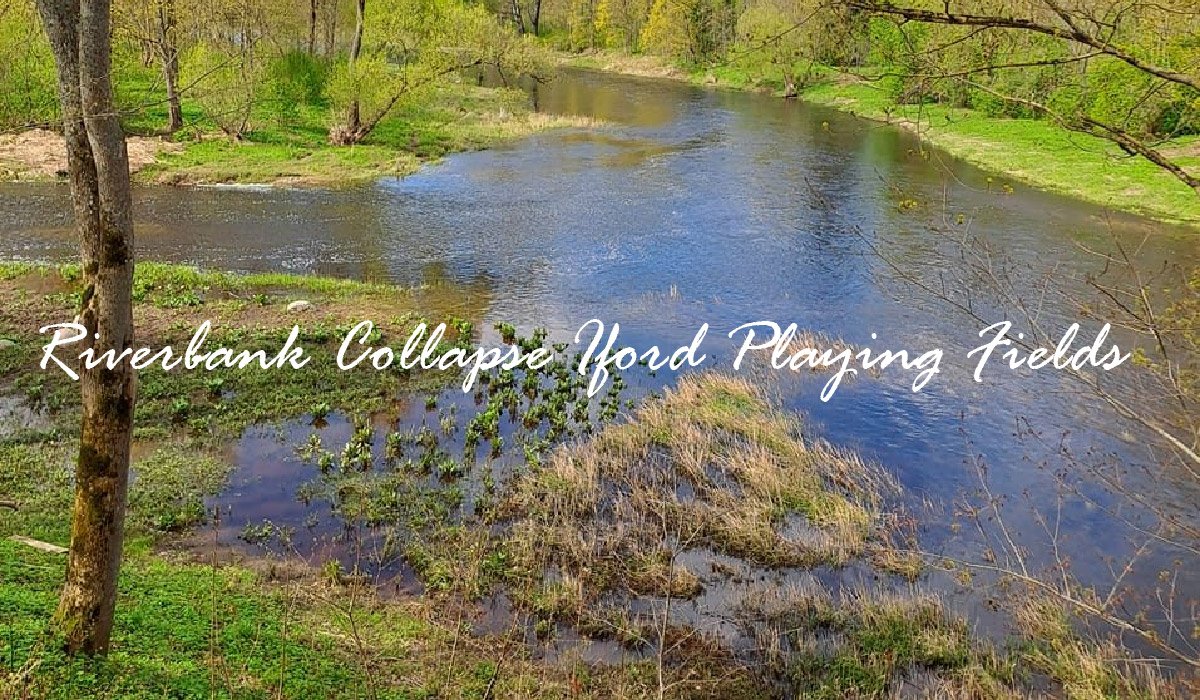
The Riverbank Collapse Iford Playing Fields occurred between May 27 and 29, 2025, after a spell of intense weather that included heavy rainfall and strong winds. Nicky Adams, a local dog walker, was among the first to spot the collapse and sounded the alarm on May 29. She described a startling change in the landscape—an entire section of riverbank had vanished, taking trees and fencing with it. What had once been a gently sloping bank was now a steep, dangerous cliff edge.
The River Stour surged where soil and vegetation had once held firm. Local authorities from the BCP Council were quick to respond, cordoning off the area and conducting preliminary assessments. Paths were closed, warning signs went up, and residents watched with concern as one of their most beloved recreational spaces turned into a hazard zone overnight. The timeline of the collapse shows how quickly natural forces, when left unmanaged, can turn from passive processes into destructive events.
Root Causes — Why the Riverbank Collapsed
Soil Saturation and Weather Extremes
A major factor behind the Riverbank Collapse Iford Playing Fields was the saturation of the soil due to prolonged and intense rainfall. As the ground absorbed more water than it could handle, the structure of the soil became compromised. Water replaces air in the soil matrix, making the ground heavier and less cohesive. When strong winds followed the rains, the compromised soil structure failed under pressure, causing the riverbank to collapse. Saturated soil loses its ability to bind together and becomes susceptible to slippage, particularly on unreinforced slopes near moving water. This combination of water overload and high winds created the perfect conditions for a sudden collapse.
Erosion and Riverbank Structure
The geography of the Riverbank Collapse Iford Playing Fields site plays a critical role in understanding why this disaster occurred. The playing fields are located on a floodplain, where the soil is naturally soft—composed of silt, sand, and clay deposited by centuries of river movement. These floodplains are prone to a process called fluvial erosion, where the moving water gradually wears away at the riverbank. Over time, this undercutting weakens the base of the bank, creating instability. As the bank erodes from beneath, the upper layers lose their support, eventually giving way. In the case of Iford, the lack of stabilizing vegetation—such as deep-rooted shrubs and trees—made the structure even more fragile, accelerating the inevitable collapse.
Human Impact and Land Use
Although nature set the stage, human activity contributed to the Riverbank Collapse Iford Playing Fields. Over years of use, the area has seen increased foot traffic, mowing, compacting of soil, and nearby infrastructure development. The removal of native vegetation and replacement with manicured grass has stripped the riverbank of its natural defenses. Deep-root systems that once held the soil in place were replaced with shallow grasses that offer little support. The construction of nearby paths, bridges, and buildings also altered the water flow and placed stress on the ecosystem. This long-term degradation, caused by well-intentioned but poorly managed land use, created vulnerabilities that nature eventually exploited.
Climate Change Factors
The Riverbank Collapse Iford Playing Fields also reflects larger environmental shifts tied to climate change. What was once considered a rare flood event—occurring once every 50 years—is now happening with increased frequency. Rising sea levels, altered rainfall patterns, and unpredictable weather have made riverbanks like Iford’s more vulnerable. As weather extremes become the new normal, the resilience of infrastructure and natural spaces must be reevaluated. This collapse isn’t an isolated event but a symptom of a world grappling with rapidly changing environmental dynamics.
Safety and Risk Assessment — Who’s Affected Now?
Public Access and Walkers
Following the Riverbank Collapse Iford Playing Fields, public safety is the primary concern. Walkers, joggers, and cyclists are among the most at-risk groups, as the ground near the riverbank might still appear safe but could be hollowed out and unstable beneath the surface. Authorities have erected fencing and signs, but these physical measures cannot fully prevent the curiosity or misjudgment of the public. Until full stabilization occurs, caution is vital. The collapse zone is still considered hazardous, and even seemingly firm areas could give way without warning.
Local Wildlife and Habitats
Beyond human safety, the Riverbank Collapse Iford Playing Fields has disrupted a thriving natural ecosystem. The collapse uprooted trees, destroyed nesting grounds, and sent a wave of sediment into the River Stour. This sudden change has affected bird species, aquatic life, and native vegetation. Fish populations could suffer from reduced oxygen and visibility due to increased sedimentation. Amphibians and insects that depended on stable river edges are now displaced. The long-term ecological balance of the area has been thrown into disarray, and restoring it will require thoughtful and sustained intervention.
Infrastructure and Utilities
While no homes were immediately damaged by the Riverbank Collapse Iford Playing Fields, nearby infrastructure is at risk. Paths, drainage systems, and even underground utilities may become compromised if erosion continues unchecked. The train bridge not far from the site has been flagged for monitoring, as have recreational facilities like the football pitches and playgrounds. Preventing further damage means not only repairing the collapse site but also inspecting surrounding areas for secondary vulnerabilities.
Local Reaction — Community Shock, Frustration, and Hope
The emotional toll of the Riverbank Collapse Iford Playing Fields has been deeply felt. Residents who regularly used the fields for exercise, dog walking, and family outings expressed sadness and anxiety. Social media exploded with images of the collapsed bank, flooded with comments calling for accountability and faster action from the council. Some users noted that warning signs of erosion had been visible for years, and that maintenance requests had gone unanswered. Yet amidst the anger, there is hope. Community groups are organizing cleanup efforts, awareness campaigns, and even replanting drives. This collective response shows that even in loss, there’s an opportunity to rebuild stronger—both in the land and the community spirit.
Council Response — What Has Been Done So Far?
In the aftermath of the Riverbank Collapse Iford Playing Fields, the BCP Council responded with swift on-site evaluations. Temporary fencing was erected, public access was limited, and environmental officers began inspecting the damage. Soil testing, geotechnical assessments, and erosion modeling are now underway. The council has reached out to partner organizations and environmental consultancies to develop a remediation plan. Public updates have been issued, promising a focus on ecological restoration rather than just quick fixes. However, some residents still feel the response lacks urgency and transparency—factors the council must address if it hopes to regain public trust.
Environmental Impact — Beyond the Surface Damage
Sedimentation and Water Quality
One of the most dangerous consequences of the Riverbank Collapse Iford Playing Fields is the sudden influx of sediment into the River Stour. This material clouds the water, reduces sunlight penetration, and disrupts aquatic photosynthesis. It also smothers fish eggs and clogs gills, leading to a decline in fish populations. Over time, these changes can ripple up the food chain, altering the entire ecosystem balance.
Vegetation Loss and Ecosystem Shift
The uprooting of trees and native plants destabilized the bank and removed critical shelter for birds and mammals. The loss of shade from trees also means increased sunlight on the bank, which dries out the soil faster and makes it more prone to erosion. Invasive species may now colonize the disturbed area, further complicating recovery.
Long-Term Ecological Rebalancing
Restoring ecological balance after the Riverbank Collapse Iford Playing Fields means more than replanting trees. It requires strategic rebalancing of soil composition, hydrology, and species diversity. Any restoration plan must account for long-term sustainability, not just short-term aesthetics.
Engineering and Restoration — Preventing Future Collapses
Immediate Safety Measures
Emergency fencing, hazard signage, and geotechnical monitoring have been implemented. These measures are meant to stop further harm while planning for full restoration. Experts are also monitoring groundwater and soil moisture to detect further risks.
Soft Engineering (Bioengineering) Solutions
Eco-friendly solutions such as coir rolls, willow staking, and live fascines are being proposed. These bioengineering methods not only hold the soil together but also promote biodiversity. Native plants with deep root systems like alder and willow are vital for long-term stability.
Hard Engineering Where Needed
In high-risk zones, gabion baskets, riprap (rock armoring), and sheet piling may be necessary. These interventions are costly and more invasive but offer immediate support to critical sections of the riverbank.
Climate-Resilient Design
Modern design practices include elevated walkways, flexible green spaces that can flood safely, and smart drainage systems. These are being considered in response to the Riverbank Collapse Iford Playing Fields to prepare for future climate threats.
Community Involvement — How Locals Can Help
The future of the Riverbank Collapse Iford Playing Fields also depends on local engagement. Residents can join replanting initiatives, report early signs of erosion, and participate in feedback forums. Schools and youth groups are being encouraged to take part in eco-education projects to build awareness among the next generation. The success of restoration hinges not just on funding and science, but on sustained community involvement.
What Happens Next — The Path to Recovery
Phase 1 — Stabilisation
Immediate actions will include removing debris from the river, securing unstable edges, and reducing risk of further collapse. Engineers are working to reinforce the toe of the slope with natural and artificial supports.
Phase 2 — Regeneration and Replanting
Once safe, native vegetation will be reintroduced to rebuild root strength and biodiversity. Drainage improvements will help redirect water away from weak zones, and gentle regrading of slopes will make them less prone to slippage.
Phase 3 — Ongoing Monitoring and Maintenance
The Riverbank Collapse Iford Playing Fields recovery plan includes installing sensors to monitor soil movement and moisture. Yearly risk assessments and ecological surveys will guide adjustments to the restoration plan.
The Human Side — Memories, Loss, and Resilience
To many, the Riverbank Collapse Iford Playing Fields is more than a physical loss. It’s emotional. Generations have walked that path, played on those fields, and watched sunsets along the river. The collapse feels like the loss of a friend—a reminder of how fragile our relationship with nature truly is. But this shared sorrow has sparked action, awareness, and hope. Iford’s story could become a blueprint for how communities respond to ecological crises—with care, resolve, and vision.
Conclusion
The Riverbank Collapse Iford Playing Fields stands as a powerful reminder of what happens when natural systems are stressed to their limits. But it’s also a moment of opportunity—a chance to rethink, rebuild, and reimagine how we care for the landscapes we love. With the right balance of engineering, ecology, and community spirit, Iford can emerge stronger and safer than before. The time to act is now, because the land may shift again, but so too can our commitment to protecting it.
FAQs About Riverbank Collapse Iford Playing Fields
1: What caused the Riverbank Collapse at Iford Playing Fields?
The Riverbank Collapse Iford Playing Fields was caused by a mix of heavy rain, strong winds, soil saturation, natural erosion, and the loss of deep-rooted vegetation. Over time, these conditions weakened the riverbank until it suddenly gave way.
2: Is it safe to visit Iford Playing Fields after the riverbank collapse?
Yes, most of Iford Playing Fields is still safe to visit. However, areas near the collapsed riverbank are fenced off. Visitors should stay behind barriers and follow safety signs to avoid unstable ground.
3: Can this type of riverbank collapse happen again?
Yes, a similar collapse can happen again if erosion, flooding, and poor drainage are not properly managed. Ongoing monitoring and new safety measures are being planned to reduce the risk in the future.
4: What is the council doing to fix the riverbank at Iford?
The council is working with environmental experts to stabilize the riverbank using safe, eco-friendly methods. Plans include replanting trees, using erosion-control materials, and improving water drainage around the area.
5: How can local residents help with the recovery?
Locals can help by joining community cleanups, attending planting days, reporting signs of erosion, and staying informed through official updates. Community involvement is key to protecting Iford Playing Fields long-term.
More Articles You May Read Also:
Glasgow Water Main Break Shettleston Road: Major Disruption Sparks Urgent Action
Szukkubusz Secrets: The Dark Myth That Still Captivates Minds
Sydneebeeyxo: The Inspiring Rise of a Relatable Digital Star